The kitchen is often called the heart of the home — a place where meals are made, conversations happen, and mornings begin. But for many people, especially those who are neurodivergent or sensory-sensitive, it can also be one of the most overwhelming spaces.
The sound of appliances, glare from bright lights, and constant movement can make it hard to feel grounded.
A sensory-friendly kitchen reimagines all of that.
A sensory-friendly kitchen changes that.
It’s designed to support how you feel in the space — helping you stay calm, focused, and at ease while cooking and eating.
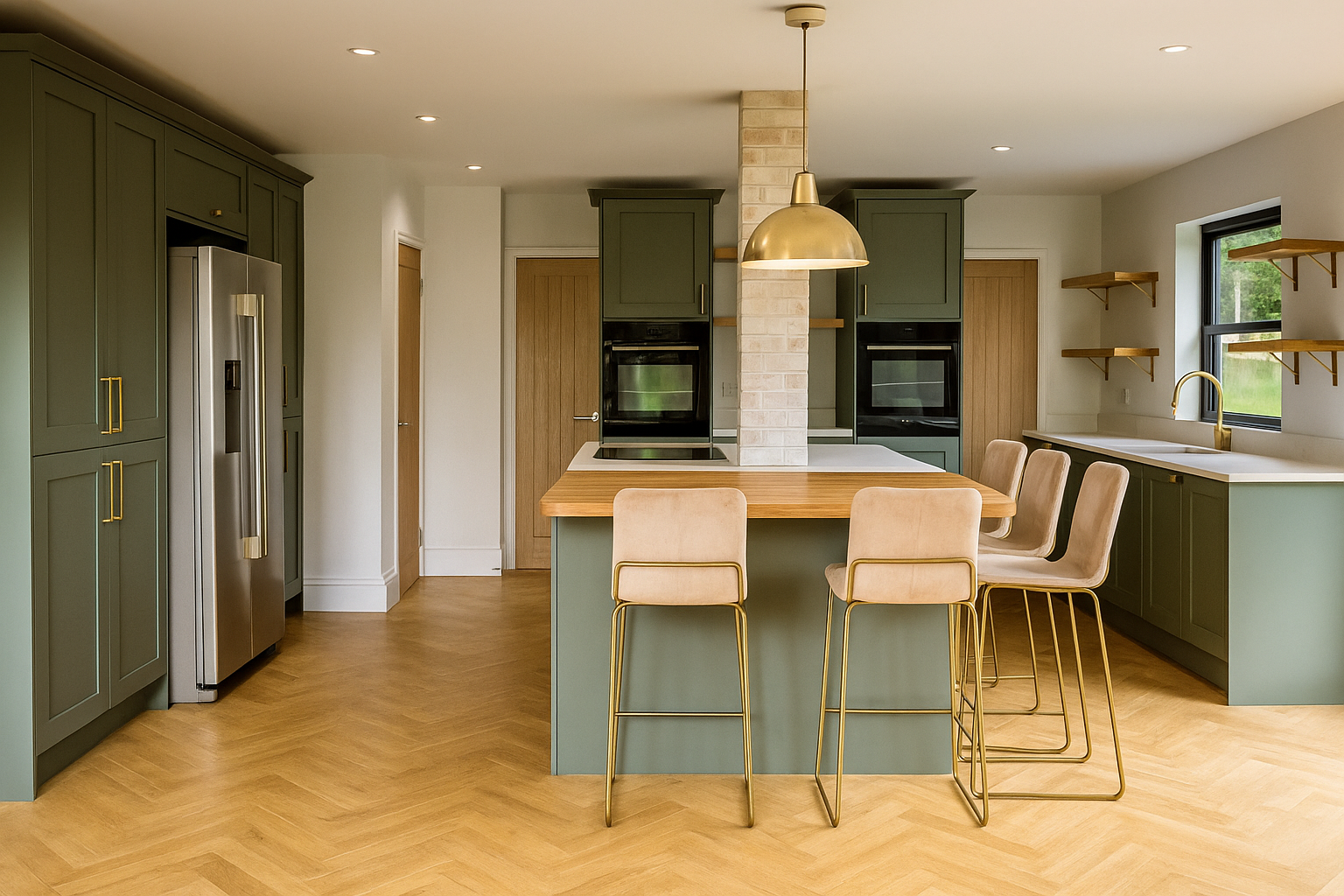
A bright, calming kitchen with soft green cabinets, warm wooden accents, and natural light. The design feels gentle and sensory-friendly, with soothing colours and tactile materials.
✨ Lighting that feels like sunlight, not a spotlight
Harsh lighting can feel jarring and exhausting. Instead, layer your light sources: warm pendants, under-cabinet lights, and dimmable options that let you adjust the brightness depending on your energy levels or the time of day.
If possible, let natural light be the main feature — soft and grounding.
🎨 Colours that calm, not compete
The colours in your kitchen should invite you in. Muted greens, warm neutrals, or gentle blues create a sense of peace and balance.
Avoid harsh contrasts and cool greys that can feel sterile or overstimulating. The goal is harmony — a palette that soothes your eyes and your mind.
🔈 Soften the sounds
Kitchens are naturally noisy spaces, but small changes can make a big difference.
Opt for quiet appliances, add felt pads under chairs, and use soft-close drawers to prevent sudden bangs.
Even a simple rug or fabric blind can absorb sound and make the space feel calmer.
🖐️ Textures that comfort
Texture has a powerful impact on how a space feels. Smooth, cold surfaces can be off-putting, while warm woods, matte finishes, or brushed metals feel more comforting to touch.
If you’re a sensory seeker, a mix of textures — grainy wood, smooth stone, and soft fabrics — can provide gentle stimulation.
👃 Smells that support focus and calm
Cooking smells can linger and feel overwhelming, so good ventilation is key.
Choose natural cleaning products, avoid overpowering scents, and let fresh air flow through whenever possible. A small potted herb or vase of fresh greenery can subtly refresh the space too.
🧺 Clarity and calm through organisation
A cluttered kitchen can instantly heighten stress. Keep your worktops clear and storage solutions simple.
Transparent jars, labelled drawers, and consistent layouts create predictability — a subtle but powerful way to reduce decision fatigue and sensory overload.
🌿 Bring the outside in
There’s something instinctively calming about nature.
Incorporate natural materials like stone, wood, or linen, and add a touch of green — whether that’s a plant on the windowsill or herbs by the stove. These small details help reconnect you to your senses and your surroundings.
💚 Because design should feel good
A sensory-friendly kitchen isn’t about perfection or trend.
It’s about how you feel when you’re in it — the ease, the calm, the sense of belonging. When your environment supports your sensory needs, daily life feels better and more you.